
Celebrity
Nidal Wonder Age: How Old Is the Gymnast Star Today?


How Old Is the Gymnast Star Today?
Some athletes spend years training in silence before the world notices them. Others seem to appear overnight, flipping, twisting, and defying gravity in ways that make people stop scrolling. Nidal Wonder belongs to the second group. His videos spark amazement, disbelief, and one question that keeps trending again and again: nidal wonder age.
People are not just curious about how old he is. They want to understand how someone so young can move with such control, strength, and confidence. Age, in Nidal’s case, is tied directly to discipline, talent, family support, and an unusual level of focus for someone still in his teens.
This article answers the question clearly—how old is Nidal Wonder today?—and then goes much deeper. It explores his background, training, rise to fame, and what his age really means for his future.
Who Is Nidal Wonder?
Nidal Wonder is an American gymnast, acrobat, and social media personality best known for his high-level flips, parkour-style tricks, and gravity-defying stunts. He gained massive popularity on platforms like YouTube and Instagram, where his athletic ability quickly set him apart from other young creators.
What makes Nidal Wonder unique is not just skill, but consistency. His movements are clean, controlled, and confident—traits that usually take many years to develop.
Nidal Wonder Age: The Clear Answer
How Old Is Nidal Wonder Today?
Nidal Wonder was born on December 21, 2010.
As of today, Nidal Wonder age is 14 years old.
This fact alone surprises many people. When viewers watch his routines, they often assume he is much older. Understanding nidal wonder age helps put his achievements into perspective and explains why his story is so remarkable.
Why Nidal Wonder Age Is Trending Everywhere
The phrase nidal wonder age keeps trending because his abilities seem far beyond what people expect from someone his age. Viewers want to know:
-
How long he has been training
-
Whether his skills are natural or learned
-
How much discipline it takes at such a young age
-
What kind of support system he has
Age gives context. In Nidal’s case, it adds to the sense of awe.
Early Life and Background
Growing Up With Movement
From a very young age, Nidal Wonder showed an unusual interest in movement. Climbing, jumping, flipping—these were not just activities, but instincts. While other kids played casually, Nidal treated physical movement like a language.
His family noticed early that this wasn’t just play. It was talent mixed with obsession.
Family Support and Encouragement
One of the most important parts of Nidal’s story is family support. His parents encouraged his passion while also focusing on safety, structure, and balance. That combination allowed him to grow without burnout.
This support is a key reason why nidal wonder age does not feel like a limitation in his journey.
Training and Discipline at a Young Age
More Than Natural Talent
While talent matters, it does not explain everything. Nidal Wonder trains consistently. Strength, flexibility, balance, and control all require routine and repetition.
At just 14, his training includes:
-
Gymnastics fundamentals
-
Bodyweight strength exercises
-
Flexibility routines
-
Spatial awareness drills
This level of structure explains why his skills look so polished.
Mental Focus and Confidence
Mental discipline is often overlooked. Nidal shows focus that many older athletes struggle to develop. He approaches difficult moves calmly, visualizing success before execution.
That mindset is rare at any nidal wonder age, especially at 14.
Rise to Social Media Fame
Viral Videos and Rapid Growth
Nidal Wonder’s rise to fame came through short-form videos that showcased his abilities in real environments—parks, gyms, and everyday spaces. These videos felt spontaneous but controlled.
They worked because:
-
The skills looked impossible
-
The performer was clearly young
-
The execution was clean and confident
Viewers shared his content not just for entertainment, but out of disbelief.
Building a Loyal Audience
As his following grew, so did interest in nidal wonder age. Fans wanted to track his growth, compare progress, and watch him evolve over time.
Nidal Wonder Age and Physical Development
Training While Growing
One of the biggest challenges for young athletes is growth. Bodies change quickly during teenage years. Strength, coordination, and balance must be constantly adjusted.
Nidal’s training appears designed to grow with him, not fight against natural development.
Injury Awareness and Safety
Despite performing advanced skills, Nidal Wonder and his team emphasize control and safety. This careful approach is essential, especially at his age.
Comparison With Other Young Athletes
Why Nidal Stands Out
Many young gymnasts are talented. What makes Nidal Wonder different is his combination of:
-
Fearlessness
-
Control
-
Creativity
-
Consistency
When people learn nidal wonder age, they often compare him to elite-level youth athletes around the world—and he holds his own.
Public Attention and Pressure
Handling Fame at a Young Age
Fame can be overwhelming, especially for teenagers. Nidal Wonder appears grounded, focused, and protected by family guidance. His content stays centered on skill, not controversy.
This balance helps him handle attention responsibly.
Staying a Kid While Being a Star
Despite fame, Nidal still presents as a kid who enjoys movement and challenge. That balance is crucial. His age is not being rushed or hidden—it is embraced.
BIO: Nidal Wonder at a Glance
| Category | Details |
|---|---|
| Full Name | Nidal Ajib |
| Date of Birth | December 21, 2010 |
| Age | 14 years old |
| Profession | Gymnast, Acrobat, Social Media Influencer |
| Nationality | American |
| Net Worth (approx.) | $500,000 – $1 million |
| Notable Works / Achievements | Viral gymnastics videos, advanced flips, parkour skills |
Why Nidal Wonder Age Matters for His Future
Long-Term Potential
At just 14, Nidal Wonder has time on his side. His future options include:
-
Competitive gymnastics
-
Professional athletics
-
Entertainment and media
-
Coaching or brand building
Understanding nidal wonder age makes it clear that his journey is only beginning.
Room for Growth and Evolution
As he matures, his style, strength, and direction may change. What matters is that he has built a strong foundation early.
Discipline, Balance, and Education
Life Beyond Training
Despite intense training, education remains important. Maintaining balance ensures that success in one area does not limit growth in others.
This balanced approach is often missing in young prodigies, but it appears central to Nidal’s path.
Influence on Other Young Athletes
Inspiration Without Pressure
Many kids look up to Nidal Wonder. The key difference is that his story inspires effort, not shortcuts. He shows what discipline can achieve, even at a young age.
Common Questions About Nidal Wonder Age
People often ask:
-
Is Nidal Wonder really only 14?
-
How long has he been training?
-
Will he compete professionally?
-
How does he stay safe?
All these questions circle back to nidal wonder age as the starting point.
What Makes His Story Unique
Nidal Wonder’s story is not about overnight fame. It is about:
-
Early passion
-
Consistent effort
-
Family support
-
Respect for growth
At his age, that combination is rare.
The Road Ahead
Looking forward, Nidal Wonder’s future depends on patience and smart decisions. With proper guidance, he can transition from viral star to long-term athlete or creator.
His age gives him flexibility. Nothing needs to be rushed.
Conclusion: Age Is His Advantage
So, how old is Nidal Wonder today?
Nidal Wonder age is 14 years old.
But that number doesn’t limit him—it defines his advantage.
At 14, Nidal Wonder has already shown discipline, courage, and skill far beyond expectations. His age explains why his journey is so impressive, and why so many people are watching closely. He represents potential, not pressure.
If you enjoy watching talent grow naturally, Nidal Wonder is a name worth remembering. Share your thoughts, discuss his progress, or simply appreciate what focus and support can achieve at such a young age.

Riley Keough Net Worth and Acting Journey 2026
Introduction
Some names in Hollywood carry history, legacy, and expectation all at once. That’s exactly the case with Riley Keough. From the moment she stepped into the entertainment world, people were already curious—not just about her talent, but about the legacy she comes from and how she would shape her own identity.
But here’s the interesting part: Riley Keough didn’t rely solely on her background. Instead, she built her own career step by step, project by project. And now in 2026, discussions around Riley Keough net worth and her acting journey have reached a whole new level of attention.
So how did she rise in Hollywood? What defines her success today? And why is Riley Keough considered one of the most versatile talents of her generation?
Let’s break it down in detail.
Riley Keough Biography
Before diving into her career and earnings, it helps to understand who she is at her core.
| Field | Details |
|---|---|
| Full Name | Danielle Riley Keough |
| Date of Birth | May 29, 1989 |
| Age | 37 (as of 2026) |
| Profession | Actress, Producer, Director |
| Nationality | American |
| Net Worth (approx.) | $20–25 million |
| Notable Works / Achievements | Daisy Jones & The Six, Zola, American Honey |
Early Life and Hollywood Legacy
Riley Keough was born into one of the most famous families in entertainment history. She is the granddaughter of music legend Elvis Presley and daughter of Lisa Marie Presley. That alone placed her under a spotlight from the very beginning.
However, what makes Riley Keough different is how she approached that legacy. Instead of leaning on it, she slowly stepped away from it to build her own identity.
Growing up around fame can be both a blessing and a challenge. While opportunities are easier to access, expectations are also much higher. Riley Keough chose the harder path—earning recognition on her own terms.
Moreover, she was not interested in overnight fame. She focused on modeling first, then gradually transitioned into acting.
Riley Keough Acting Journey
Early Career Steps
Like many actors, Riley Keough started with smaller roles and modeling assignments. These early experiences helped her understand camera presence, expression, and storytelling.
Her early work included appearances in films that allowed her to experiment and grow without pressure.
Breakthrough in Film Industry
The turning point in Riley Keough’s career came when she began taking on more serious and independent film roles. She quickly became known for choosing complex, emotionally rich characters.
Some of her early standout performances included:
- American Honey
- Mad Max: Fury Road
- Zola
Each of these roles showed a different side of her acting ability. She wasn’t typecast, and that made a big difference in her career growth.
Television Success
Riley Keough’s career expanded further when she entered television.
Her most significant role came in:
- Daisy Jones & The Six
This project allowed her to showcase emotional depth, musical storytelling, and character transformation. It also introduced her to a global streaming audience.
Riley Keough Net Worth in 2026
As of 2026, Riley Keough net worth is estimated at around $20–25 million.
This figure reflects not just acting income, but a combination of multiple revenue streams.
Income Sources
Riley Keough net worth comes from:
- Film acting salaries
- Television series earnings
- Producing and directing projects
- Streaming platform contracts
- Brand partnerships and endorsements
- Residual income from past works
In addition, her growing involvement behind the camera has expanded her financial opportunities significantly.
Career Growth Timeline
To understand Riley Keough net worth better, it helps to see her career progression clearly.
| Year | Milestone |
|---|---|
| Early 2000s | Modeling and early film exposure |
| 2010–2015 | Supporting film roles and indie projects |
| 2015–2018 | Breakthrough performances in major films |
| 2020 | Critical success with Zola |
| 2023 | Major recognition from Daisy Jones & The Six |
| 2026 | Established actress and filmmaker |
This steady rise shows consistency rather than sudden fame.
Acting Style and Strengths
One of the reasons Riley Keough stands out is her unique acting style.
Key Strengths
- Emotional realism
- Natural screen presence
- Strong character immersion
- Ability to adapt across genres
- Subtle but powerful expressions
Moreover, she often chooses roles that challenge her rather than comfort her. That makes her filmography more diverse and respected.
Why Riley Keough Is Respected in Hollywood
There are many actors in Hollywood, but not all of them earn critical respect. Riley Keough has managed to achieve both popularity and credibility.
Reasons Behind Her Reputation
- Selective role choices
- Strong indie film background
- Willingness to take creative risks
- Transition into producing and directing
- Consistent performance quality
In addition, she has successfully stepped out of her family’s shadow while still honoring her legacy.
Personal Life and Public Image
Riley Keough maintains a relatively private lifestyle compared to many Hollywood stars. She does not rely heavily on constant media exposure.
Instead, she focuses on:
- Work over publicity
- Creative projects
- Family responsibilities
- Long-term career development
This approach has helped her maintain a balanced and respected public image.
Challenges She Has Faced
Even with fame and opportunity, Riley Keough’s journey has not been without challenges.
Common Challenges
- High expectations due to family legacy
- Pressure from media comparisons
- Emotional demands of complex roles
- Balancing acting and producing responsibilities
However, she has consistently managed to turn challenges into growth opportunities.
Riley Keough as a Filmmaker
In recent years, Riley Keough has expanded beyond acting into producing and directing.
This shift shows her evolution from performer to storyteller. It also plays a significant role in increasing Riley Keough net worth over time.
By stepping behind the camera, she gains:
- Creative control
- Higher earning potential
- Industry influence
- Long-term career stability
Interesting Facts About Riley Keough
Here are some lesser-known facts that make her story even more interesting:
- She comes from one of the most iconic music families
- She began her career in modeling before acting
- She prefers independent films over blockbuster roles
- She has worked both in front of and behind the camera
- She is known for carefully selecting meaningful projects
These details highlight her thoughtful and intentional career approach.
Future Outlook
Looking ahead, Riley Keough’s future appears strong and versatile.
Potential Career Directions
- More directing projects
- Expansion into television production
- Continued film roles in indie cinema
- International collaborations
- Awards recognition for filmmaking
If her current trajectory continues, Riley Keough net worth is likely to grow steadily over the next decade.
Conclusion
Riley Keough’s journey is not just about fame or legacy. It’s about building identity, choosing meaningful work, and growing steadily in a highly competitive industry.
From early modeling days to critically acclaimed performances in film and television, she has shown that success doesn’t have to be rushed—it can be carefully crafted.
Today, Riley Keough net worth reflects years of dedication, smart career choices, and artistic evolution. But more importantly, her story represents resilience and individuality in Hollywood.
As she continues to expand into directing and producing, one thing is clear: her journey is far from over.
What do you think about Riley Keough’s career path and success so far? Feel free to share your thoughts and join the discussion.

In American politics, some figures stand out not because they follow the usual path, but because they challenge it in quiet and consistent ways. One such figure is Thomas Massie. When people search for Thomas Massie, they are usually trying to understand his background, his beliefs, and how he approaches political decision-making in a very analytical and independent way. His story is not just about politics, but also about engineering, logic, and a very structured way of thinking that he carries into public service.
Early Life and Background
Thomas Massie grew up in the United States and showed an early interest in how things work. Unlike many politicians who come from law or political science backgrounds, Thomas Massie built his foundation in science and engineering. This technical curiosity shaped much of his thinking style later in life. He was known for being focused, detail-oriented, and interested in solving real-world problems rather than abstract debates.
Education and Engineering Path
Before entering politics, Thomas Massie pursued higher education in engineering. He attended the Massachusetts Institute of Technology (MIT), one of the most respected technical universities in the world. There, he specialized in mechanical engineering and developed a strong foundation in problem-solving, systems thinking, and innovation. This engineering mindset later became a defining feature of how Thomas Massie approaches policy and legislation.
BIO: Thomas Massie
| Detail | Information |
|---|---|
| Full Name | Thomas Harold Massie |
| Date of Birth | January 13, 1971 |
| Age | 55 (as of 2026) |
| Profession | Politician, Engineer |
| Nationality | American |
| Net Worth (approx.) | Multi-million USD |
| Notable Works / Achievements | U.S. Representative, Engineering Background |
Early Career Before Politics
Before becoming a public figure, Thomas Massie worked in engineering and technology-related fields. He was involved in product development, mechanical design, and startup innovation. His early career focused on building systems, improving efficiency, and solving technical problems. However, over time, he became more interested in how government systems function and how policy decisions impact everyday life. This curiosity eventually led him into politics, where he believed he could apply logical and structured thinking on a larger scale.
Entry into Politics
Thomas Massie began his political journey at the local level, where he focused on issues like government spending, transparency, and efficiency. His reputation grew as someone who questioned established systems and preferred independent thinking over strict party alignment. Eventually, he moved into national politics, becoming a member of the United States House of Representatives. United States House of Representatives became the platform where Thomas Massie built his national political identity.
Political Philosophy of Thomas Massie
The political philosophy of Thomas Massie is often described as constitutional and independent. He strongly emphasizes limited government, individual liberty, and fiscal responsibility. Thomas Massie is known for evaluating policies based on logic and long-term impact rather than political pressure. This approach often makes him stand out from other members of Congress because he does not always follow party lines. Instead, he focuses on what he believes aligns with constitutional principles and practical reasoning.
Legislative Work and Focus Areas
Throughout his time in Congress, Thomas Massie has worked on a wide range of legislative topics. His focus areas include government spending, budget control, technology policy, agriculture, civil liberties, and regulatory reform. Thomas Massie often approaches these issues with an engineering mindset, breaking down complex problems into structured systems and evaluating their efficiency. This method makes his contributions distinct in legislative discussions.
Thomas Massie and Independent Thinking
One of the most discussed traits of Thomas Massie is his independence. He is known for voting based on principle rather than political alignment. This has earned him both praise and criticism. Supporters admire his consistency and willingness to stand alone when necessary, while critics argue that his independence sometimes makes collaboration more difficult. However, Thomas Massie continues to maintain that independent thinking is essential for responsible governance.
Personal Life and Values
Outside of politics, Thomas Massie leads a relatively private and grounded life. He lives in Kentucky and maintains strong ties to rural communities. His lifestyle reflects simplicity, self-reliance, and practicality. Thomas Massie often emphasizes values such as family, independence, and practical problem-solving. These values are consistent with both his personal and professional life, creating a sense of continuity in how he approaches different roles.
Public Perception of Thomas Massie
Public opinion about Thomas Massie varies depending on political perspective. Supporters view him as a principled and intelligent lawmaker who prioritizes the Constitution and logical reasoning. Critics sometimes see him as too rigid or independent for collaborative politics. However, regardless of perspective, Thomas Massie is widely recognized as a thoughtful and analytical figure in American politics who brings a unique background to legislative work.
Key Facts About Thomas Massie
Thomas Massie is known for several defining characteristics. He is an MIT-trained engineer who transitioned into politics. He serves as a U.S. Representative and is known for his independent voting style. Thomas Massie emphasizes limited government, fiscal responsibility, and constitutional interpretation. His engineering background strongly influences his structured and analytical approach to policy-making, making him different from many traditional politicians.
Challenges and Political Journey
Like many public figures, Thomas Massie has faced challenges in his political career. These include disagreements within party structures, public scrutiny, and debates over legislative decisions. However, these challenges have also reinforced his reputation as someone who prioritizes principle over popularity. Thomas Massie continues to navigate these complexities while maintaining his independent approach to governance.
Conclusion
The story of Thomas Massie is one of transition from engineering to politics, from technical problem-solving to public policy. His background as an engineer shapes how he thinks, analyzes, and makes decisions in Congress. Thomas Massie stands out as a figure who values logic, independence, and constitutional principles in a political environment often driven by compromise and alignment. Whether one agrees with his positions or not, his approach remains consistent and distinctive in American politics.
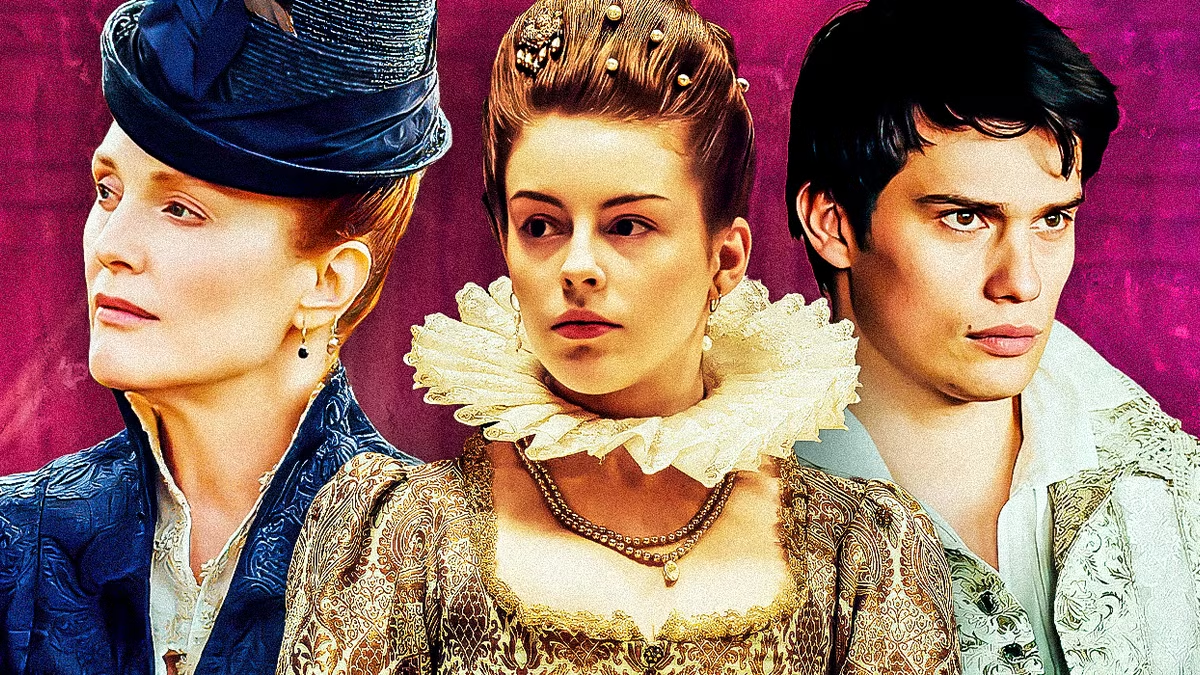
Cast of Mary and George: Full Character Guide
Some historical dramas don’t just tell a story—they build an entire world that pulls you into politics, power, ambition, and human emotion. That’s exactly what makes the Cast of Mary and George so fascinating to explore.
From intense performances to layered character arcs, this series has sparked a lot of curiosity among viewers who want to know exactly who is who, and how each actor contributes to the story’s depth.
In this full guide, we’ll break down the Cast of Mary and George, their roles, character importance, and why the ensemble works so well together.
What Is Mary and George About?
Before diving into the Cast of Mary and George, it helps to understand the show itself.
Mary & George is a historical drama that explores ambition, influence, and power within the royal courts of early modern Europe. It focuses on political manipulation, personal relationships, and the pursuit of status in a highly competitive world.
The series blends historical inspiration with dramatic storytelling, which is why the Cast of Mary and George plays such a crucial role in bringing it to life.
Main Cast of Mary and George Overview
The Cast of Mary and George features a strong lineup of experienced and rising actors who each bring something unique to their roles.
Let’s break them down one by one.
Julianne Moore as Mary Villiers
One of the most powerful performances in the Cast of Mary and George comes from Julianne Moore.
Character: Mary Villiers
Mary Villiers is a strategic, ambitious mother determined to secure power and influence through her son.
Why her role stands out:
- Strong emotional depth
- Masterful political manipulation portrayal
- Complex mother-son dynamic
- Intense dramatic presence
Julianne Moore brings a controlled yet emotionally charged performance that anchors much of the Cast of Mary and George.
Nicholas Galitzine as George Villiers
Another central figure in the Cast of Mary and George is Nicholas Galitzine.
Character: George Villiers
George is charming, ambitious, and quickly rises through royal circles with the help of his mother.
Key traits:
- Charismatic personality
- Political ambition
- Emotional vulnerability
- Rapid rise in court influence
His performance adds emotional balance to the intense political world of the series.
Tony Curran as King James I
A major historical figure in the Cast of Mary and George is King James I, played by Tony Curran.
Character: King James I
He is portrayed as powerful, unpredictable, and deeply influential in shaping court politics.
Character highlights:
- Political authority
- Complex personal relationships
- Strategic decision-making
- Emotional contradictions
His interactions define much of the tension in the Cast of Mary and George storyline.
Supporting Cast of Mary and George
The Cast of Mary and George also includes several supporting characters who enrich the story.
Notable supporting roles:
- Courtiers and advisors shaping political decisions
- Family members influencing ambition and loyalty
- Royal attendants navigating court life
- Rivals competing for power and status
Each supporting actor strengthens the realism of the series.
Character Dynamics in the Cast of Mary and George
One of the most interesting aspects of the Cast of Mary and George is how characters interact.
Key relationships:
- Mother-son ambition between Mary and George
- Political tension with King James I
- Court rivalries and alliances
- Hidden emotional motivations
These dynamics create constant tension and drama throughout the series.
Why the Cast of Mary and George Works So Well
The success of the Cast of Mary and George is not just about individual talent—it’s about chemistry.
Strengths of the ensemble:
- Strong acting experience across the board
- Balanced mix of veteran and rising actors
- Deep emotional storytelling
- High production value performances
- Authentic period character portrayal
The result is a cast that feels believable and immersive.
Historical Inspiration Behind the Cast
The Cast of Mary and George is based on real historical influences, though dramatized for storytelling.
Historical elements include:
- Royal court politics
- Power struggles in monarchy systems
- Social climbing and influence tactics
- Early modern European history
This grounding in history adds depth to each performance.
Character Breakdown Table
Here is a simplified look at the main Cast of Mary and George:
| Actor | Character | Role Type |
|---|---|---|
| Julianne Moore | Mary Villiers | Lead strategist |
| Nicholas Galitzine | George Villiers | Court favorite |
| Tony Curran | King James I | Monarch figure |
This structure helps viewers understand the central focus of the Cast of Mary and George.
Themes Reflected Through the Cast
The Cast of Mary and George doesn’t just tell a story—it reflects broader themes.
Major themes include:
- Power and manipulation
- Family ambition
- Social mobility
- Loyalty and betrayal
- Political survival
Each actor contributes to expressing these themes naturally.
Performance Style and Acting Approach
A standout feature of the Cast of Mary and George is the performance style.
Acting characteristics:
- Theatrical yet grounded delivery
- Emotional intensity in dialogue
- Subtle facial expression work
- Strong physical presence
- Period-accurate speech rhythm
This combination helps bring historical drama to life.
Audience Reaction to the Cast of Mary and George
Viewer response to the Cast of Mary and George has been largely positive.
Common audience impressions:
- “Strong and believable performances”
- “Chemistry between characters feels real”
- “A refreshing take on historical storytelling”
- “Visually and emotionally engaging cast”
The ensemble has clearly resonated with audiences.
Why the Cast Matters to the Story
Without a strong Cast of Mary and George, the story would lose much of its impact.
Their importance includes:
- Driving emotional storytelling
- Creating believable political tension
- Enhancing historical authenticity
- Supporting narrative complexity
In many ways, the cast is the foundation of the series.
Final Thoughts on the Cast of Mary and George
The Cast of Mary and George succeeds because it blends strong acting, historical inspiration, and emotional storytelling into a cohesive experience.
Each actor contributes something unique, whether it’s intensity, charm, authority, or emotional depth.
At its core, the Cast of Mary and George reminds us that history is not just about events—it’s about people, relationships, and the choices they make.
If you enjoy historical dramas with strong performances and layered storytelling, this ensemble is one worth paying attention to.
And as the series continues to gain attention, the Cast of Mary and George will likely remain a key talking point among fans and critics alike.

Riley Keough Net Worth and Acting Journey 2026

Thomas Massie: Biography, Career, and Key Facts

Cast of Mary and George: Full Character Guide

Who Is Alex Karp Wife? Private Life of Palantir CEO

Melanie Zanona Salary, Career Growth & Net Worth Revealed

How to Make Slime: The Ultimate DIY Guide for Kids and Adults
-
 Business10 months ago
Who Is Alex Karp Wife? Private Life of Palantir CEO
-
 Celebrity9 months ago
Melanie Zanona Salary, Career Growth & Net Worth Revealed
-
 Lifestyle11 months ago
How to Make Slime: The Ultimate DIY Guide for Kids and Adults
-

 Business10 months ago
Rahki Giovanni Net Worth: Income, Fitness, and Success
-

 Nature10 months ago
Fascinating World of Facts: A Journey Through Datos Curiosos
-

 Celebrity11 months ago
Who Is Drew Pritchard New Wife? Inside the Antique Star’s Private Love Life
-

 Entertainment11 months ago
Strands NYT: Unraveling the Digital Threads of a New Online Trend
-

 Entertainment8 months ago
Adam Woodyatt Net Worth Revealed: Career, Income & Assets