
Celebrity
Liz Ted Bundy: The Truth Behind Their Relationship

Published
35 minutes agoon
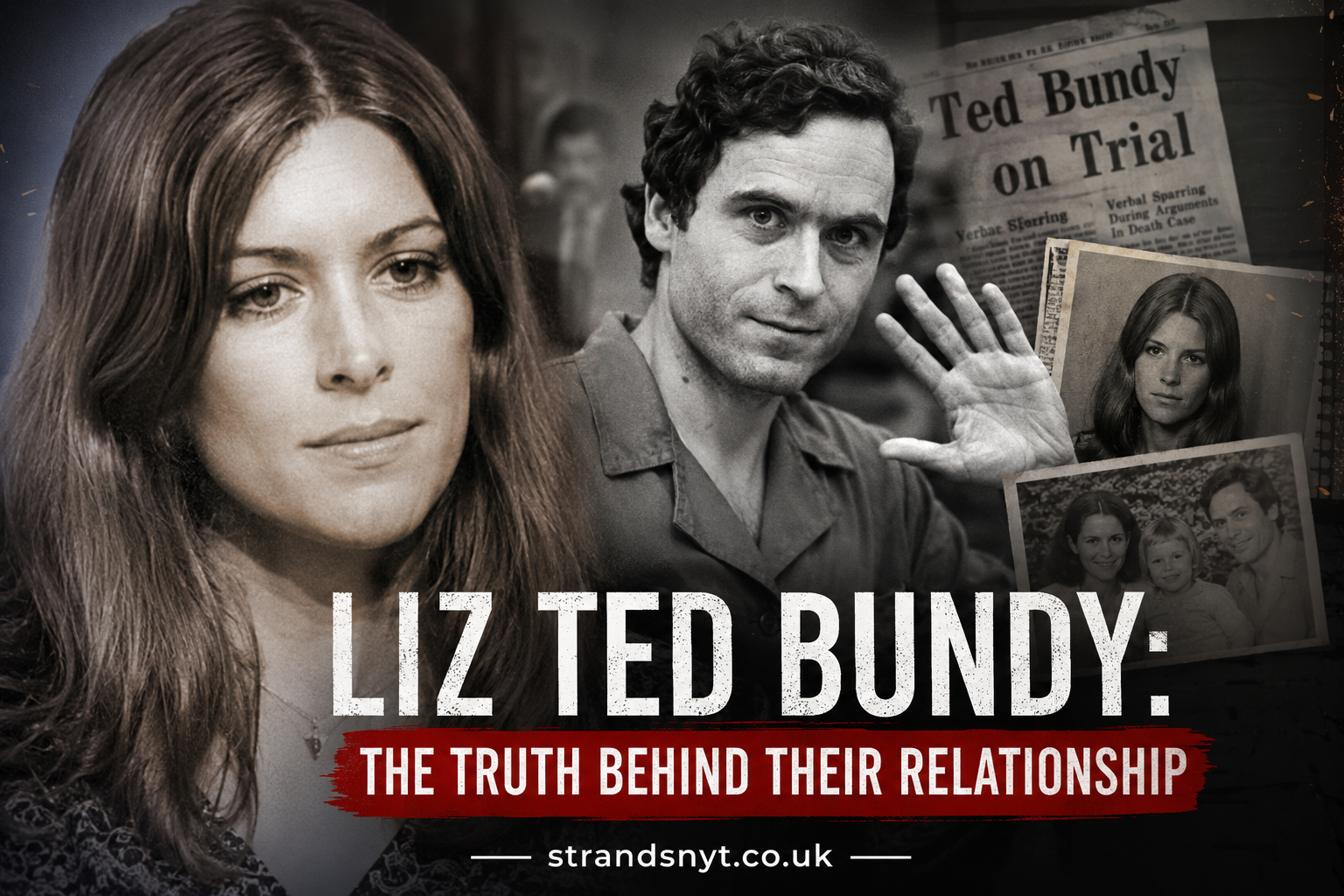
Liz Ted Bundy: The Truth Behind Their Relationship
A Love Story That Turned Into a Warning
Some stories do not begin with darkness. They begin with a smile, a shared drink, a hopeful conversation, and the quiet belief that life may finally be getting better. That is what makes the Liz Ted Bundy story so unsettling. It was not only about crime. It was about trust. It was about a woman who loved someone she thought she knew, while the truth was slowly breaking through the cracks.
When people hear Ted Bundy’s name, they often think of one of America’s most infamous serial killers. Yet behind the headlines, courtrooms, interviews, and documentaries, there was Elizabeth Kloepfer, better known by her pen name Elizabeth Kendall, or simply Liz. She was not a side character in his story. She was a real woman, a mother, a partner, and eventually, someone who had to face a truth most people could never imagine.
The Liz Ted Bundy relationship has remained one of the most discussed parts of the Bundy case because it shows something frighteningly human. Evil does not always enter a room looking obvious. Sometimes it appears charming, intelligent, polite, and dependable. Sometimes it helps with groceries, plays with a child, and talks about marriage.
This article takes a closer look at the truth behind their relationship, who Liz was, how she met Ted Bundy, what warning signs appeared, and why her story still matters today.
Liz Ted Bundy Bio Section
| Detail | Information |
|---|---|
| Full Name | Elizabeth Kloepfer, also known as Elizabeth Kendall |
| Date of Birth | December 31, 1946 |
| Age | 79 years old as of 2026 |
| Profession | Author, memoirist, former administrative assistant |
| Nationality | American |
| Net Worth (approx.) | Not publicly verified |
| Notable Works / Achievements | Author of The Phantom Prince: My Life with Ted Bundy; her account helped shape public understanding of Bundy’s private life |
Elizabeth Kloepfer was born in Utah and later became widely known through her memoir, The Phantom Prince: My Life with Ted Bundy. She had a long relationship with Ted Bundy from 1969 to 1976, and her account became one of the most personal views into Bundy’s double life.
Who Was Liz Before Ted Bundy?
Before the world connected her name to Ted Bundy, Liz was simply a woman trying to rebuild her life. She was a divorced single mother who moved to Seattle and wanted a fresh start. Like many people in their twenties, she carried hopes, doubts, emotional wounds, and a desire to feel loved.
This is important because the Liz Ted Bundy story is often told through the shadow of Bundy’s crimes. However, Liz had her own life, fears, and responsibilities. She was raising her daughter and trying to build stability. She was not looking for danger. She was looking for comfort, partnership, and a sense of belonging.
That human detail matters. It reminds readers that manipulation often works because it meets a real emotional need. Ted Bundy did not enter Liz’s life as a monster in a headline. He entered as a charming young man who seemed thoughtful, educated, and kind.
How Liz Met Ted Bundy
Liz met Ted Bundy in 1969 in Seattle. At the time, Bundy seemed like a promising young man. He was studying, working, and presenting himself as someone with ambition. For Liz, he appeared to be gentle and attentive. He also formed a bond with her daughter, which made the relationship feel even more meaningful.
The early Liz Ted Bundy relationship looked normal from the outside. They went out together, spent time as a family, and shared ordinary moments. That normal appearance is one reason the story continues to disturb people. It proves how different public image and private truth can be.
Bundy was known for using charm as a mask. Around Liz, he could appear caring and emotionally present. However, behind that mask, investigators later connected him to a long pattern of violence. Ted Bundy was born Theodore Robert Cowell in 1946 and was executed in Florida in 1989 after being convicted of multiple murders.
Why Their Relationship Felt Real to Liz
It is easy for outsiders to ask, “How did she not know?” But that question is too simple and, frankly, unfair. People in close relationships often see the version of a person they are shown every day. When affection, routine, apology, and hope are mixed together, the truth becomes harder to accept.
Liz saw Ted Bundy as a boyfriend, not as a suspect. He was part of her home life. He spent time with her child. He talked about the future. He could be warm and supportive. At times, he made her feel chosen.
In addition, Liz had personal struggles of her own. She has written about emotional dependence and how hard it was to pull away. This is where the Liz Ted Bundy story becomes more than true crime. It becomes a study of attachment, denial, fear, and emotional survival.
The Emotional Pull
Relationships do not always end when logic says they should. People stay because they remember the good moments. They wait for the person they love to “come back.” They explain away strange behavior because the alternative feels too painful.
Liz’s connection to Bundy was complicated by:
- Love and emotional attachment
- Her hope for a stable family life
- Bundy’s charm and manipulation
- Fear of being wrong
- Confusion caused by his lies
- The shock of connecting him to terrible crimes
This is why the Liz Ted Bundy relationship remains so haunting. It shows how someone can be close to danger and still not fully understand it.
Warning Signs Liz Began to Notice
Over time, Liz noticed things that did not sit right. Some details seemed small at first, but they built into something harder to ignore. She reportedly noticed similarities between Bundy and descriptions connected to police investigations. There were odd objects, strange absences, and behavior that made her uneasy.
The mind often resists terrifying conclusions. When something feels impossible, people search for a more comfortable explanation. Liz did that, too. She questioned herself. She doubted her instincts. However, her concerns eventually became serious enough that she contacted authorities.
That decision matters. In the larger Liz Ted Bundy story, it shows courage. She was emotionally attached to him, yet she still acted on suspicion. That cannot have been easy.
Common Red Flags in the Story
While every relationship is different, Liz’s experience highlights warning signs that readers can learn from:
- A partner giving unclear answers about their whereabouts
- Strange items or behavior that do not match their explanation
- A pattern of secrecy
- Emotional manipulation after serious questions
- Feeling afraid to trust your own instincts
- A relationship where charm keeps covering up concern
Of course, not every secretive person is dangerous. However, when someone repeatedly makes you feel confused, anxious, or unsafe, that feeling deserves attention.
Liz’s Calls to Police
One of the most important parts of the Liz Ted Bundy story is that Liz did reach out to police. She reported concerns about Bundy after becoming suspicious. This detail is often discussed because it shows how close the truth sometimes was, and how difficult it can be for authorities to act without enough evidence.
Liz’s suspicion did not instantly solve the case. That is another painful part of the story. Real investigations are complex. A tip may be important, but it still needs proof, timing, and legal support. Even so, Liz’s actions became part of the broader trail that eventually exposed Bundy’s double life.
Her choice to speak up also challenges the idea that victims or partners are always passive. Liz was afraid, uncertain, and emotionally torn, but she still tried to do something.
The Role of Denial in the Liz Ted Bundy Relationship
Denial is not stupidity. It is often a survival response. When the truth is too painful, the mind slows it down. It gives the heart time to catch up.
For Liz, accepting that Bundy might be connected to horrific crimes meant accepting that her life, her home, and her memories had been touched by danger. That is not something anyone accepts overnight.
The Liz Ted Bundy relationship shows how denial can live beside suspicion. A person can feel that something is wrong and still hope they are mistaken. Liz’s story is powerful because it does not paint her as perfect or foolish. It shows her as human.
Why Denial Can Feel Safer
Denial may happen because:
- The truth would destroy a person’s sense of safety
- The relationship has loving memories
- The manipulator gives convincing excuses
- The person fears public shame
- The situation feels too extreme to believe
In Liz’s case, all these forces seemed to collide. She loved someone who was living a secret life. That emotional conflict sits at the heart of the Liz Ted Bundy story.
Ted Bundy’s Charm and Manipulation
Ted Bundy’s public image has been discussed for decades because he did not match the stereotype many people expected. He could appear educated, confident, and socially skilled. That made him more dangerous, not less.
In the Liz Ted Bundy relationship, charm played a major role. Bundy knew how to reassure. He knew how to appear normal. He understood how to perform innocence. This ability helped him move through social spaces without raising immediate alarm.
However, charm is not character. Politeness is not proof of goodness. Confidence is not honesty. Liz’s story reminds readers to look beyond the surface, especially when actions and words do not match.
The Phantom Prince and Liz’s Voice
Liz later shared her side through The Phantom Prince: My Life with Ted Bundy. The memoir gave readers a personal look at what it felt like to love a man who was hiding terrible secrets. It also showed the emotional cost of being connected to someone like Bundy.
The book remains important because it shifts attention away from Bundy’s image and toward the people affected by him. The Liz Ted Bundy story is not just about a killer’s girlfriend. It is about a woman trying to understand how her reality had been twisted.
Her voice matters because true crime can sometimes become too focused on criminals. Liz’s account brings the emotional damage back into the conversation. It asks readers to consider the people left behind, the confusion they carried, and the healing they had to fight for.
Liz Ted Bundy in Movies and Documentaries
The relationship became widely discussed again through films and documentaries about Ted Bundy. One of the most well-known portrayals appeared in Extremely Wicked, Shockingly Evil and Vile, which drew from Liz’s memoir and focused partly on her experience. Vanity Fair reported that the film was based on Kloepfer’s memoir and explored her gradual realization of Bundy’s crimes.
Media portrayals helped introduce the Liz Ted Bundy relationship to a new generation. However, they also raised an important question: how should true crime stories be told?
The best versions of this story do not glamorize Bundy. They do not turn pain into entertainment. Instead, they show the emotional reality of being close to someone dangerous and not knowing how to escape the truth.
What Makes the Liz Ted Bundy Story So Disturbing?
The most disturbing part is not only that Bundy lied. It is that he lived two lives so convincingly. Around Liz, he could act like a boyfriend and family figure. Elsewhere, he was connected to fear, violence, and investigation.
This contrast is what makes the Liz Ted Bundy story unforgettable. It breaks the comforting idea that danger is always easy to spot. It reminds us that people can hide behind charm, education, humor, and kindness.
The Human Lessons
There are several lasting lessons from Liz’s experience:
- Trust your instincts when something feels wrong
- Do not ignore repeated patterns of secrecy
- Love should not make you feel unsafe
- Charm should never replace accountability
- Speaking up can matter, even when you are unsure
- Survivors deserve empathy, not blame
These lessons make the story relevant beyond true crime fans. It speaks to relationships, emotional safety, manipulation, and the courage it takes to question someone you love.
Why Liz Should Not Be Blamed
Some people unfairly judge Liz for staying with Bundy or not knowing sooner. That kind of judgment ignores the reality of manipulation. It is easy to be certain from a distance. It is much harder when you are inside the relationship.
Liz did not have the full picture. She had pieces. Some pieces were loving. Some were frightening. Some did not make sense until later. That is often how manipulation works.
The Liz Ted Bundy story should be read with compassion. She was not responsible for Bundy’s crimes. She was one of the many people harmed by his lies. Her experience deserves understanding, not blame.
Liz Ted Bundy and the Psychology of Trust
Trust is one of the strongest forces in human life. We need it to love, raise families, build friendships, and feel safe. However, trust can also be abused.
Bundy used trust like a tool. He presented himself as someone who deserved belief. Liz, like many people in loving relationships, wanted to believe him. That does not make her weak. It makes her human.
The Liz Ted Bundy relationship is a painful example of how trust can be manipulated when one person is honest and the other is not. It also shows why emotional recovery can take years. When someone betrays your trust that deeply, you do not just lose the relationship. You may also lose confidence in your own judgment.
The Difference Between Love and Control
At first, Liz may have believed she was in a complicated but loving relationship. Over time, however, Bundy’s lies created confusion and emotional control. This is an important difference.
Love brings clarity, respect, and safety. Control brings doubt, fear, and dependence. In the Liz Ted Bundy story, that line became painfully blurred.
Healthy Love Should Feel Like This
A healthy relationship should include:
- Honest communication
- Emotional safety
- Respect for boundaries
- Consistent behavior
- Accountability
- Peace, not constant anxiety
When a relationship is built on lies, the other person is never standing on solid ground. Liz’s experience shows how damaging that can be.
Why This Story Still Gets Searches Today
People still search for Liz Ted Bundy because the story feels personal in a way many true crime cases do not. It asks a terrifying question: what if someone you loved was not who they claimed to be?
That question reaches beyond the Bundy case. It touches everyday fears about trust, identity, and hidden lives. It also attracts readers who want to understand the emotional side of true crime, not just the timeline of events.
From an SEO perspective, the keyword Liz Ted Bundy connects readers to topics like Elizabeth Kendall, Elizabeth Kloepfer, Ted Bundy girlfriend, The Phantom Prince, true crime relationships, emotional manipulation, Bundy documentary, and survivor stories. These related terms help build a complete, helpful article that answers what people are really searching for.
What Happened After Bundy?
After Bundy’s arrest, trials, and eventual execution, Liz stepped away from the spotlight. That decision makes sense. Her story had already been tied to one of the most infamous criminal cases in American history. Privacy became a form of protection.
Ted Bundy was executed on January 24, 1989, in Florida. Before his death, he confessed to numerous murders, though the exact full number of victims remains uncertain.
For Liz, the ending was not simple. There is no clean emotional finish to a relationship like that. Even when the person is gone, the memories remain complicated. The questions remain. The pain changes shape, but it does not vanish overnight.
The Liz Ted Bundy story is therefore not only about discovering the truth. It is also about surviving it.
Why Liz’s Story Deserves Respect
Liz’s story deserves respect because it gives readers a rare view of manipulation from the inside. She was not an investigator, journalist, or prosecutor. She was a woman in love with someone who turned out to be terrifyingly false.
Her memoir helped people understand how Bundy maintained a normal image. It also helped shift attention toward the emotional damage caused by his double life. The Liz Ted Bundy relationship remains important because it gives a voice to confusion, fear, and recovery.
In true crime writing, this matters. Stories should not only focus on criminals. They should also honor the people affected by them.
Lessons Readers Can Take From Liz Ted Bundy
The Liz Ted Bundy story is not just history. It carries lessons that still matter today.
Trust Your Gut
If something feels wrong again and again, do not silence yourself. Your instincts may notice patterns before your mind can explain them.
Look at Actions, Not Just Words
Charming words can hide harmful behavior. Consistency matters more than promises.
Ask for Help Early
When fear and doubt build up, speak to someone you trust. Isolation makes confusion worse.
Do Not Blame Yourself for Being Misled
Manipulative people work hard to be believed. Being deceived does not mean you are foolish.
Choose Safety Over Closure
Sometimes you may never get the perfect explanation. Still, you can choose distance, peace, and safety.
Conclusion: The Truth Behind Liz and Ted Bundy’s Relationship
The Liz Ted Bundy story is painful because it begins like an ordinary romance and ends as a chilling lesson about trust. Liz loved a man who was hiding a life she could barely imagine. She questioned herself, noticed warning signs, contacted police, and later shared her experience with the world.
Her story should not be reduced to “Ted Bundy’s girlfriend.” Elizabeth Kendall was a woman caught in a nightmare of love, doubt, and betrayal. She survived the emotional wreckage of a relationship built on lies, and her account helped people understand how danger can hide behind a familiar face.
In the end, the truth behind their relationship is not just about Bundy’s deception. It is about Liz’s courage, confusion, survival, and voice. That is why the Liz Ted Bundy story still matters.
If this article helped you understand the human side of the case, share it with someone who follows true crime or leave a comment with your thoughts on why Liz’s story still feels so powerful today.
You may like
Celebrity
Lionel Dahmer: The Story Behind Jeffrey Dahmer Father
Published
28 minutes agoon
May 19, 2026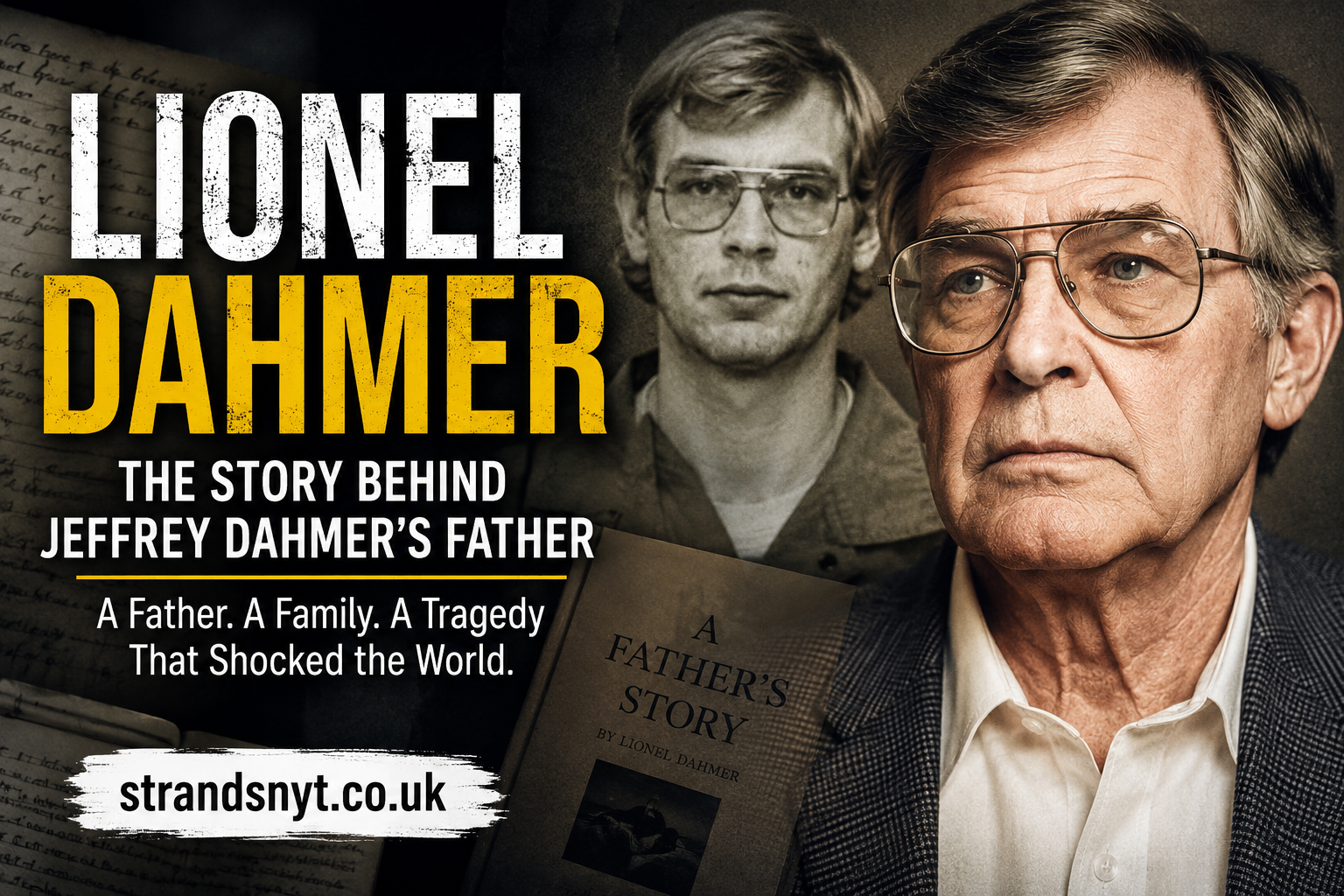
Lionel Dahmer: The Story Behind Jeffrey Dahmer’s Father
Some names become known for achievements. Others become known because history drags them into a story they never wanted to be part of. Lionel Dahmer belongs to the second group.
To many people, he was simply “Jeffrey Dahmer’s father.” But that label, while true, does not tell the whole story. Behind the headlines was a trained chemist, a husband, a father, an author, and a man who spent much of his later life trying to understand how his son became one of America’s most infamous criminals.
The story of Lionel Dahmer is not easy to read. It sits at the uncomfortable crossroads of family, guilt, grief, parenting, public judgment, and true crime history. He was not the criminal. He was not responsible for the murders committed by Jeffrey Dahmer. Yet, for decades, the public looked at him with one burning question: What did he know?
That question followed him everywhere.
In this article, we’ll look at Lionel Dahmer’s biography, family background, relationship with Jeffrey Dahmer, his book, his public interviews, and the complicated legacy he left behind.
Lionel Dahmer Bio
| Detail | Information |
|---|---|
| Full Name | Lionel Herbert Dahmer |
| Date of Birth | July 29, 1936 |
| Age | 87 at the time of death |
| Profession | Chemist, Researcher, Author |
| Nationality | American |
| Net Worth (approx.) | Not publicly confirmed; estimates vary and should be treated carefully |
| Notable Works / Achievements | Author of A Father’s Story, father of Jeffrey Dahmer, public speaker in interviews about family, crime, and warning signs |
Lionel Herbert Dahmer was born in West Allis, Wisconsin, and later became known as an American chemist and author. He died on December 5, 2023, at age 87.
Who Was Lionel Dahmer?
Lionel Dahmer was much more than a name attached to a notorious criminal case. Before the world knew Jeffrey Dahmer, Lionel lived a fairly ordinary American life. He studied chemistry, built a career, married, had children, and tried to provide for his family.
He was educated, analytical, and deeply interested in science. That detail matters because it shaped the way he later tried to understand his son’s behavior. Instead of speaking only from emotion, Lionel often looked for explanations in psychology, biology, family structure, and childhood development.
However, no amount of education could prepare him for what happened in 1991, when Jeffrey Dahmer was arrested and the world learned about the murders he had committed.
From that point on, Lionel Dahmer became part of a public tragedy. Reporters wanted answers. Viewers wanted blame. Readers wanted details. Families of victims wanted justice and dignity. And Lionel was left to carry a burden that few parents could imagine.
Early Life and Education of Lionel Dahmer
Lionel Dahmer grew up in Wisconsin, a place that would remain tied to his family story for decades. He later pursued higher education in chemistry and worked in scientific research. According to available biographical records, he studied at institutions including the University of Wisconsin–Madison, Marquette University, and Iowa State University, where he completed doctoral work in chemistry.
This scientific background gave Lionel Dahmer a certain public image. He was not seen as loud or emotional in the way some television audiences expected. Instead, he often appeared calm, careful, and measured. Some people interpreted that as coldness. Others saw it as a man trying not to break apart in front of cameras.
There is something deeply human about that contrast. A scientist spends years looking for causes and patterns. But when the problem is your own child, logic has limits.
Lionel Dahmer’s Family Life
Lionel Dahmer married Joyce Flint, and the couple had two sons, Jeffrey and David. Their marriage was troubled, and the household was marked by tension, emotional strain, and eventual divorce.
Jeffrey Dahmer was born on May 21, 1960, in Milwaukee, Wisconsin. He later became one of the most notorious serial killers in American history, convicted in connection with the murders of 17 boys and young men between 1978 and 1991.
For Lionel Dahmer, family life became one of the most examined parts of his past. After Jeffrey’s arrest, people searched his childhood for clues. They asked about parenting, divorce, loneliness, emotional distance, school years, strange hobbies, and warning signs.
This kind of public searching can be useful when done responsibly. It can help people understand risk factors and missed opportunities. However, it can also become unfair when it turns a complex human life into a simple blame game.
Families are rarely simple. The Dahmer family was no exception.
The Divorce and Its Emotional Impact
The divorce between Lionel and Joyce was one of the major events often discussed in relation to Jeffrey Dahmer’s adolescence. Jeffrey was a teenager when the family structure became more unstable. Some writers and commentators have suggested that the divorce may have deepened his isolation.
Still, it is important to be careful here. Divorce does not create a killer. Many children go through family separation and do not become violent. The story of Jeffrey Dahmer involves many layers, including mental health, secrecy, social isolation, disturbing behavior, alcohol use, and criminal choices.
Lionel Dahmer later reflected on family problems and wondered whether he had missed signs. That kind of reflection is painful, but it also shows why his story continues to interest readers. He was not offering easy excuses. He was trying to face an impossible question: Could anything have changed the outcome?
Lionel Dahmer and Jeffrey Dahmer’s Relationship
The relationship between Lionel Dahmer and Jeffrey Dahmer was complicated. It was not simply loving or distant. It had moments of care, confusion, frustration, hope, and regret.
Lionel did not abandon Jeffrey after his crimes became known. In fact, he visited him in prison and continued to express love for him as his son. That choice drew mixed reactions from the public.
Some people saw it as loyalty. Others saw it as disturbing. But parental love is not the same as approval. Lionel could condemn Jeffrey’s crimes while still feeling the deep, painful bond of fatherhood.
That is one of the hardest parts of the Lionel Dahmer story. He had to live with two truths at once:
- His son committed terrible crimes.
- His son was still his child.
For most people, that emotional conflict is almost impossible to imagine.
Did Lionel Dahmer See Warning Signs?
This is one of the most common questions people ask.
In later interviews and writings, Lionel Dahmer admitted that he looked back and saw things that troubled him. Jeffrey had been shy, withdrawn, and interested in dead animals during his youth. Lionel also discussed concerns about Jeffrey’s behavior as he grew older.
However, hindsight is powerful. Once the world knows the ending, every earlier detail looks like a warning. At the time, many signs may have seemed odd, sad, or worrying, but not necessarily evidence of future violence.
That does not mean the signs should be ignored. It means we should discuss them with care.
Commonly discussed concerns in Jeffrey Dahmer’s early life include:
- Social withdrawal
- Difficulty forming close friendships
- Family tension
- Alcohol use
- Emotional isolation
- Disturbing interests
- Trouble with boundaries
- Problems after high school
- Legal trouble before the murder case became public
For parents and readers today, the lesson is not to panic over every strange behavior. The lesson is to pay attention when a young person becomes deeply isolated, emotionally disconnected, or harmful to themselves or others.
A Father’s Story: Lionel Dahmer’s Book
In 1994, Lionel Dahmer published A Father’s Story, a nonfiction book about Jeffrey Dahmer’s upbringing, crimes, and the emotional aftermath.
The book is one of the main reasons people still search for Lionel Dahmer today. It gives readers a view into the father’s mind, not as a legal expert or detective, but as a parent trying to understand his child’s descent into darkness.
What makes the book powerful is not that it answers everything. It does not. Instead, it shows the confusion of a parent who is left with memories, regrets, and unanswered questions.
Why the Book Still Matters
A Father’s Story remains important because it offers a rare perspective in true crime writing. Most crime stories focus on the killer, the investigation, or the courtroom. Lionel’s book focuses on family aftermath.
It raises difficult questions:
- How does a parent live after discovering a child committed horrific crimes?
- Can love survive shame?
- Where does responsibility begin and end?
- What warning signs should families take seriously?
- How can society discuss crime without forgetting victims?
For SEO readers and true crime audiences, Lionel Dahmer is a figure of emotional complexity. He is not a hero. He is not a villain. He is a father caught in a nightmare.
Lionel Dahmer in Public Interviews
After Jeffrey Dahmer’s arrest and conviction, Lionel appeared in several interviews. He spoke with major media figures and took part in documentaries over the years. His interviews often focused on regret, parenting, mental health, and the pain of being connected to such a notorious case.
In 1994, Lionel and Jeffrey Dahmer appeared in an NBC interview with Stone Phillips, which became one of the most discussed interviews connected to the case.
Public interviews placed Lionel Dahmer in a difficult position. If he stayed silent, people might accuse him of hiding. If he spoke, people might accuse him of seeking attention. That is the trap many relatives of infamous criminals face.
Still, Lionel seemed to believe that speaking might help other families notice warning signs or understand the emotional cost of violence.
The Public Reaction to Lionel Dahmer
The public reaction to Lionel Dahmer has always been divided.
Some people felt sympathy for him. They saw a father grieving not only for his son’s victims but also for the loss of the son he thought he knew. Others criticized him and questioned whether he should have done more earlier in Jeffrey’s life.
Both reactions come from real emotions. True crime cases create anger, fear, sadness, and curiosity. However, the most responsible way to look at Lionel’s story is with balance.
He was not the person who committed the murders. Jeffrey Dahmer alone was responsible for his crimes. At the same time, Lionel’s reflections on family life are part of the broader conversation about prevention, emotional health, and early intervention.
Lionel Dahmer and the Netflix Era
Interest in Lionel Dahmer rose again after modern documentaries and dramatized shows brought the Jeffrey Dahmer case back into public discussion. Many younger viewers discovered the case through streaming platforms rather than newspapers or older television interviews.
This renewed attention created fresh debate. Some argued that the public should learn from the case. Others felt that repeated dramatizations risked exploiting victims’ pain.
That debate matters.
When writing about Lionel Dahmer, Jeffrey Dahmer, or any true crime subject, content should avoid glorifying the criminal. It should also avoid turning real suffering into entertainment. A Google-safe and reader-safe article should focus on facts, context, impact, and lessons.
Key Facts About Lionel Dahmer
| Topic | Detail |
|---|---|
| Known For | Being Jeffrey Dahmer’s father |
| Career | Chemistry researcher and author |
| Book | A Father’s Story |
| Public Role | Gave interviews about Jeffrey Dahmer and family warning signs |
| Family | Father of Jeffrey Dahmer and David Dahmer |
| Major Life Burden | Living with public attention after Jeffrey’s crimes |
| Death | December 5, 2023 |
Lionel Dahmer’s Net Worth
The approximate net worth of Lionel Dahmer is not clearly confirmed through reliable public financial records. Some websites mention estimates, but those numbers should be treated with caution.
Unlike celebrities, entertainers, or business figures, Lionel was not widely known for public wealth. His income likely came from his scientific career, book-related work, and possible media appearances. However, without verified financial documents, any exact number would be guesswork.
For that reason, the most honest answer is simple: Lionel Dahmer’s net worth was never officially confirmed.
Why People Still Search for Lionel Dahmer
People search for Lionel Dahmer because his story touches a painful human fear. Parents wonder whether they would notice danger in their own child. Readers wonder how a family survives public shame. True crime audiences want to understand the people around a criminal, not just the criminal himself.
There are several reasons the topic remains popular:
- The Jeffrey Dahmer case remains one of America’s most discussed criminal cases
- Lionel’s book offers a rare parental perspective
- Modern shows renewed interest in the Dahmer family
- People are curious about nature versus nurture
- Readers want to understand warning signs and family impact
- Lionel’s public loyalty to Jeffrey created debate
- His life raises questions about guilt, grief, and responsibility
In addition, Lionel Dahmer represents a side of true crime that is often overlooked: the families left behind.
Lionel Dahmer’s Complicated Legacy
The legacy of Lionel Dahmer is difficult to define in one sentence.
He was a scientist. He was an author. He was a father. He was a man connected forever to one of the darkest criminal cases in modern American history.
Some will remember him for standing by Jeffrey. Some will remember him for writing A Father’s Story. Others will remember him as a warning about emotional distance, family breakdown, and missed signs.
But perhaps the fairest way to understand Lionel is this: he spent the second half of his public life trying to make sense of something that may never fully make sense.
That does not excuse Jeffrey Dahmer. It does not reduce the suffering of the victims. It does, however, show how crime sends shockwaves far beyond the courtroom.
Lessons From the Lionel Dahmer Story
There are no easy lessons here. Still, the story of Lionel Dahmer can encourage deeper thinking.
Pay Attention to Isolation
Loneliness alone does not make someone dangerous. However, deep isolation mixed with disturbing behavior, substance abuse, or emotional numbness should never be ignored.
Talk About Mental Health Early
Families often avoid painful conversations because they feel awkward or frightening. Yet early support can matter. Therapy, school intervention, family communication, and community support can help young people before problems grow.
Avoid Turning True Crime Into Entertainment Only
True crime content should be handled with care. Real victims, real families, and real grief are involved. Articles about Lionel Dahmer should stay respectful and avoid sensational details.
Understand That Blame Is Not Always Simple
It is natural to search for someone to blame. But family systems, mental health, personal choices, and criminal behavior are complex. Jeffrey Dahmer was responsible for his crimes. Lionel Dahmer was left to live with the aftermath.
Frequently Asked Questions About Lionel Dahmer
Who was Lionel Dahmer?
Lionel Dahmer was an American chemist, author, and the father of Jeffrey Dahmer. He became publicly known after Jeffrey’s arrest in 1991.
What book did Lionel Dahmer write?
Lionel Dahmer wrote A Father’s Story, a nonfiction book published in 1994 about his son’s life, crimes, and the emotional impact on the family.
Was Lionel Dahmer a scientist?
Yes. Lionel Dahmer worked in chemistry and had an academic background in scientific research.
When did Lionel Dahmer die?
Lionel Dahmer died on December 5, 2023, at the age of 87.
Did Lionel Dahmer support Jeffrey Dahmer?
Lionel continued to visit Jeffrey and expressed love for him as his son. However, that does not mean he supported or excused Jeffrey’s crimes.
Conclusion: The Human Story Behind Lionel Dahmer
The story of Lionel Dahmer is not a simple biography. It is a painful study of fatherhood, regret, public judgment, and the long shadow of crime. He lived a private life before Jeffrey Dahmer’s arrest, but afterward, his name became tied to one of the most disturbing cases in American history.
What makes Lionel’s story so gripping is not fame or scandal. It is the emotional question at the center of it: how does a parent live with the knowledge that their child caused unimaginable harm?
There may never be a perfect answer.
Still, by looking at Lionel Dahmer with honesty and care, readers can better understand the family impact of crime, the importance of early warning signs, and the need to discuss true crime with respect for victims.
If this article helped you understand Lionel Dahmer’s life and legacy more clearly, share it with others or leave your thoughts in the comments. Some stories are hard to discuss, but thoughtful conversation is exactly what keeps them from becoming empty headlines.

Beverley Mitchell Movies and TV Shows Career Guide
Why Beverley Mitchell Still Matters to TV Fans
Some actors become part of people’s childhood without even trying. You see them on your screen every week, grow up with their characters, and years later, hearing their name instantly brings back a whole era of television. That is exactly the kind of connection many fans have with Beverley Mitchell.
For millions of viewers, Beverley Mitchell will always be remembered as Lucy Camden from 7th Heaven. She played the emotional, spirited, sometimes dramatic, but always lovable middle daughter in one of the most recognizable family dramas of the late 1990s and early 2000s. Yet her career did not begin or end with that role.
The story of Beverley Mitchell movies and TV shows is really a story about growing up in Hollywood, finding early fame, taking on emotional roles, trying music, working in family entertainment, moving into darker projects, and later reconnecting with the audience that first loved her.
She has worked in television movies, horror films, family dramas, sitcom-style projects, voice work, teen series, and nostalgic reunion content. Her career has not always been loud or flashy, but it has been steady, familiar, and deeply connected to fans who still remember the Camden family.
In this guide, we will walk through the most important Beverley Mitchell movies and TV shows, her early career, her best-known roles, her film highlights, and why she remains a memorable name in American television.
Beverley Mitchell Bio
| Bio Detail | Information |
|---|---|
| Full Name | Beverley Ann Mitchell |
| Date of Birth | January 22, 1981 |
| Age | 45 years old, as of May 2026 |
| Profession | Actress, singer, songwriter, podcast host |
| Nationality | American |
| Birthplace | Arcadia, California, United States |
| Net Worth Approx. | Around $2.5 million, based on public estimates |
| Notable Works / Achievements | 7th Heaven, Saw II, Right on Track, The Secret Life of the American Teenager, Hollywood Darlings, Catching Up with the Camdens |
Beverley Mitchell was born on January 22, 1981, in Arcadia, California, and is best known for playing Lucy Camden-Kinkirk on 7th Heaven, which aired from 1996 to 2007. She is also credited as an actress and singer, with a self-titled country album released in 2007. Public celebrity finance estimates commonly place her net worth around $2.5 million.
Who Is Beverley Mitchell?
Beverley Mitchell is an American actress and singer who became widely known as Lucy Camden on the long-running family drama 7th Heaven. She started acting at a young age and slowly built a career through guest appearances, TV movies, films, and later nostalgic projects connected to her 1990s fame.
What makes Beverley Mitchell interesting is that she represents a very specific kind of television star. She was not a tabloid-heavy celebrity built only on headlines. She was part of a weekly family show that viewers invited into their homes for years.
That kind of fame is different. It is softer, but often longer-lasting. Fans feel like they know her because they spent so much time watching her grow on screen.
Early Start in Acting
Before 7th Heaven, Beverley Mitchell appeared in several early television roles. Her first listed screen work included shows and TV films such as Big Brother Jake, Children of the Bride, Baby of the Bride, and Sinatra. These early roles gave her experience before she landed the part that changed her career.
She was still very young when she started working in entertainment, which means she learned the business while most kids her age were simply going to school and figuring themselves out.
Beverley Mitchell Movies and TV Shows: Complete Career Overview
The full list of Beverley Mitchell movies and TV shows includes family dramas, horror films, teen stories, TV movies, and nostalgic comedy. Her filmography is especially interesting because it moves between warm family-friendly projects and surprisingly darker titles.
Here is a quick overview of some of her most notable screen work:
| Title | Year / Period | Type | Role / Importance |
|---|---|---|---|
| Big Brother Jake | 1990 | TV series | Early TV role |
| Sinatra | 1992 | Miniseries | Played young Nancy Sinatra |
| 7th Heaven | 1996–2007 | TV series | Breakout role as Lucy Camden |
| The Crow: City of Angels | 1996 | Film | Early major film role |
| Right on Track | 2003 | TV movie | Disney Channel sports biopic |
| Saw II | 2005 | Film | Horror role as Laura Hunter |
| I Know What I Saw | 2007 | TV movie | Lifetime mystery thriller |
| Extreme Movie | 2008 | Film | Comedy role |
| Snowmen | 2010 | Film | Family comedy-drama |
| The Secret Life of the American Teenager | 2011–2013 | TV series | Recurring role as Kaitlin O’Malley |
| Hollywood Darlings | 2017–2018 | TV series | Played fictionalized version of herself |
| Catching Up with the Camdens | 2024–present | Podcast | 7th Heaven rewatch podcast |
Her credits show that Beverley Mitchell did not stay locked into one genre forever. She became famous through wholesome family television, but she also explored horror, comedy, drama, music, and reality-style scripted comedy.
Beverley Mitchell in 7th Heaven
No career guide about Beverley Mitchell can start anywhere else. 7th Heaven is the role that made her famous.
The show followed the Camden family, led by Reverend Eric Camden and Annie Camden, as they raised their children through everyday moral, emotional, and family issues. It aired from 1996 to 2007 and became one of the defining family dramas of its time.
Lucy Camden: Her Breakout Role
Beverley Mitchell played Lucy Camden-Kinkirk, one of the Camden children. Lucy was emotional, expressive, sometimes insecure, often funny, and very relatable to young viewers. She was not the perfect child, and that was part of her charm.
Many fans connected with Lucy because she felt real. She had crushes, heartbreaks, jealousy, faith struggles, family arguments, and growing pains. She could be dramatic, but in a way that felt very teenager-like.
For Beverley Mitchell, this role gave her a long-running platform. She played Lucy for more than a decade, which allowed viewers to watch the character grow from a young girl into an adult.
Why 7th Heaven Became So Popular
7th Heaven worked because it was easy to watch with family. It dealt with serious issues, but usually in a hopeful way. The show had a moral center, but also plenty of teen drama and warm family moments.
The series helped turn Beverley Mitchell into a familiar face. Even today, many viewers still search for her because they remember Lucy Camden so clearly.
The Cast Connection Still Lives On
One reason Beverley Mitchell stays connected to fans is that the 7th Heaven cast still has nostalgic value. In 2024, Mitchell reunited with former co-stars David Gallagher and Mackenzie Rosman for the Catching Up with the Camdens rewatch podcast, which gives fans behind-the-scenes stories about the show.
That podcast is smart because it understands something important: fans do not only love old episodes. They love hearing what the actors remember about making them.
Beverley Mitchell Movies: Her Film Career
Although television made her famous, Beverley Mitchell also appeared in several movies. Her film work is not as large as her TV career, but it includes some interesting choices.
The Crow: City of Angels
One of her early movie roles came in The Crow: City of Angels in 1996. This was a darker project than what many fans later associated with her from 7th Heaven.
The film was part of The Crow franchise, known for its gothic style and moody atmosphere. For a young actress, appearing in a film like this showed that Beverley Mitchell could work outside soft family drama.
Saw II
One of the most surprising entries in the Beverley Mitchell filmography is Saw II. Released in 2005, the horror sequel became part of one of the most famous modern horror franchises.
In the film, Beverley Mitchell played Laura Hunter. This role stood in sharp contrast to Lucy Camden. Fans who knew her mainly from 7th Heaven saw her in a much darker, more intense setting.
That kind of role can be useful for an actor. It shows range. It also reminds audiences that a performer is not limited to one innocent or family-friendly character forever.
Extreme Movie
In 2008, Beverley Mitchell appeared in Extreme Movie, a teen sex comedy. It was not the most serious film of her career, but it added another genre to her resume.
Actors who grow up on family shows often try different tones as adults. Some choices work better than others, but they help performers avoid being trapped forever in one childhood role.
Snowmen
Snowmen, released in 2010, gave Beverley Mitchell another family-friendly film credit. The movie mixed comedy and drama, offering a warmer tone than her horror work.
This kind of role fits well with Mitchell’s screen image. She has always had a natural warmth, which makes her believable in projects that involve family, young people, and emotional lessons.
Beverley Mitchell TV Movies
Television movies have been a major part of Beverley Mitchell career. That makes sense because she has always been strong in TV storytelling.
Right on Track
One of the most remembered TV movies starring Beverley Mitchell is Right on Track. The Disney Channel film told the story of Erica Enders and Courtney Enders, two sisters involved in drag racing.
Mitchell played Erica Enders, while Brie Larson played Courtney. The film mixed sports, family, determination, and girl-power storytelling. For many Disney Channel viewers, it became a memorable early-2000s movie.
I Know What I Saw
In 2007, Beverley Mitchell starred in I Know What I Saw, a Lifetime-style mystery thriller. This role moved her again into more suspenseful territory.
TV movies like this helped her remain active after 7th Heaven while also showing she could carry projects outside the Camden family universe.
Other TV Movie Work
Throughout her career, Beverley Mitchell has appeared in several television films and made-for-TV productions. These roles helped keep her visible to audiences who enjoy cable dramas, family movies, and mystery stories.
Beverley Mitchell on The Secret Life of the American Teenager
After 7th Heaven, one of the most important TV roles for Beverley Mitchell was on The Secret Life of the American Teenager. She played Kaitlin O’Malley, a school counselor.
This role was interesting because it placed Mitchell in another teen-focused family drama, but this time she was not the teenager. She was the adult figure.
That shift matters. It showed her moving from young star to mature actress.
Why This Role Fit Her Career
The show dealt with teen relationships, pregnancy, family, and emotional decisions. Because Beverley Mitchell had already spent years on a series about family and growing up, she fit naturally into that world.
Her presence also likely appealed to viewers who remembered her from 7th Heaven. It created a bridge between generations of teen drama fans.
Beverley Mitchell in Hollywood Darlings
In 2017, Beverley Mitchell starred in Hollywood Darlings alongside Jodie Sweetin and Christine Lakin. The series featured the three actresses playing fictionalized versions of themselves.
This show leaned into nostalgia in a clever way. All three women were former child or teen stars from beloved family television shows. Instead of ignoring that history, Hollywood Darlings made it part of the comedy.
Playing Herself With Humor
For Beverley Mitchell, Hollywood Darlings was a fun career turn. It allowed her to poke fun at fame, friendship, motherhood, and the strange experience of being known for a role from childhood.
This kind of project works best when actors are willing to laugh at themselves. Mitchell seemed comfortable doing that, which made the show feel playful rather than forced.
Beverley Mitchell as a Singer
Many fans know Beverley Mitchell only as an actress, but she also released music. In 2007, she released a self-titled country album.
The album reached number 30 on the Billboard Top Country Albums chart, showing that her music career had real visibility.
Her Country Music Side
Her country album fit her image in a surprising way. Beverley Mitchell has always had a down-to-earth quality, so a move into country music did not feel completely random.
She also co-wrote several songs, including deeply personal material. That gave fans another side of her, beyond scripted characters and television storylines.
Best Beverley Mitchell Movies and TV Shows to Watch
If you are new to Beverley Mitchell or want to revisit her career, these are the best starting points.
1. 7th Heaven
This is the must-watch. It is her signature role and the reason most people know her name.
2. Right on Track
A great pick for Disney Channel fans and anyone who enjoys inspirational sports movies.
3. Saw II
A surprising choice, but important for seeing her outside family drama.
4. The Secret Life of the American Teenager
A strong post-7th Heaven TV role that shows her as an adult mentor figure.
5. Hollywood Darlings
A fun nostalgic project for viewers who enjoy actors reflecting on their own fame.
6. The Crow: City of Angels
Worth watching for fans who want to see one of her early film appearances.
Beverley Mitchell Career Timeline
Here is a simple timeline of Beverley Mitchell movies and TV shows:
| Period | Career Moment |
|---|---|
| Early 1990s | Began acting in TV roles and TV movies |
| 1992 | Appeared in Sinatra as young Nancy Sinatra |
| 1996 | Appeared in The Crow: City of Angels |
| 1996–2007 | Starred as Lucy Camden in 7th Heaven |
| 2003 | Starred in Disney Channel’s Right on Track |
| 2005 | Appeared in horror sequel Saw II |
| 2007 | Released self-titled country album |
| 2011–2013 | Played Kaitlin O’Malley in The Secret Life of the American Teenager |
| 2017–2018 | Starred in Hollywood Darlings |
| 2024 | Launched Catching Up with the Camdens with former castmates |
This timeline shows that Beverley Mitchell has stayed active across different forms of entertainment for decades.
Why Beverley Mitchell’s Career Has Lasted
Some actors fade away after one famous role. Beverley Mitchell has avoided that by staying connected to the audience while also trying new projects.
She has never fully abandoned the role that made her famous, but she has not depended only on it either. That balance has helped her career feel honest.
She Understands Nostalgia
Nostalgia is powerful, especially for fans of 1990s and 2000s television. Beverley Mitchell understands that people still love 7th Heaven. Instead of running from that connection, she has embraced it through reunions, interviews, and podcast work.
She Built a Family-Friendly Image
Even when she took darker roles like Saw II, her public image remained warm and approachable. That has made her a good fit for family dramas, TV movies, and nostalgic projects.
She Grew With Her Audience
Many fans who watched Beverley Mitchell as Lucy Camden are now adults with families of their own. Seeing her in later projects, podcasts, and personal updates gives those fans a sense of continuity.
Beverley Mitchell Awards and Recognition
Beverley Mitchell received recognition early in her career, especially for her work on 7th Heaven. She won multiple Young Artist Awards for her performance as Lucy Camden and also received teen-focused recognition during the show’s run.
Awards are not the only measure of career value, of course. Sometimes the strongest proof of success is whether fans still remember your character 20 or 30 years later. By that measure, Mitchell clearly made an impact.
Beverley Mitchell’s Personal Brand
The personal brand of Beverley Mitchell is built around warmth, nostalgia, family, honesty, and resilience. She has often been open about real-life moments, including motherhood and personal loss, which has made her feel relatable to fans.
She is not the type of star who appears distant or unreachable. Instead, she feels like someone who grew up in front of viewers and then continued sharing parts of her adult life in a grounded way.
Frequently Asked Questions About Beverley Mitchell
What is Beverley Mitchell best known for?
Beverley Mitchell is best known for playing Lucy Camden-Kinkirk on the long-running family drama 7th Heaven.
What movies has Beverley Mitchell been in?
Some notable Beverley Mitchell movies include The Crow: City of Angels, Saw II, Extreme Movie, and Snowmen.
What TV shows has Beverley Mitchell appeared in?
Beverley Mitchell has appeared in 7th Heaven, The Secret Life of the American Teenager, Hollywood Darlings, Big Brother Jake, Quantum Leap, Melrose Place, and other TV projects.
Did Beverley Mitchell star in Right on Track?
Yes, Beverley Mitchell starred as Erica Enders in the Disney Channel movie Right on Track.
Was Beverley Mitchell in Saw II?
Yes, Beverley Mitchell appeared in Saw II as Laura Hunter.
Did Beverley Mitchell release music?
Yes, Beverley Mitchell released a self-titled country album in 2007.
What is Beverley Mitchell doing now?
In recent years, Beverley Mitchell has continued acting, appearing in nostalgic projects, and co-hosting the Catching Up with the Camdens rewatch podcast with former 7th Heaven castmates.
Conclusion: Beverley Mitchell’s Career Is More Than One Role
The career of Beverley Mitchell is closely tied to 7th Heaven, and that is not a bad thing. Lucy Camden gave her a place in television history and helped millions of fans connect with her. However, her career also includes Disney Channel movies, horror films, TV dramas, nostalgic comedy, music, and podcasting.
That variety makes her story more interesting than many people realize. Beverley Mitchell moved from child actress to teen star, from family drama favorite to adult performer, and from nostalgic icon to someone still actively engaging with fans.
Her movies and TV shows show a performer who grew up in public but kept working, adapting, and staying connected to the audience that first loved her. Whether you remember her from 7th Heaven, discovered her in Saw II, watched her in Right on Track, or now follow the Catching Up with the Camdens podcast, her career has a warm and lasting place in pop culture.
If this guide helped you explore Beverley Mitchell movies and TV shows, share it with another classic TV fan or leave a comment with your favorite Lucy Camden moment.
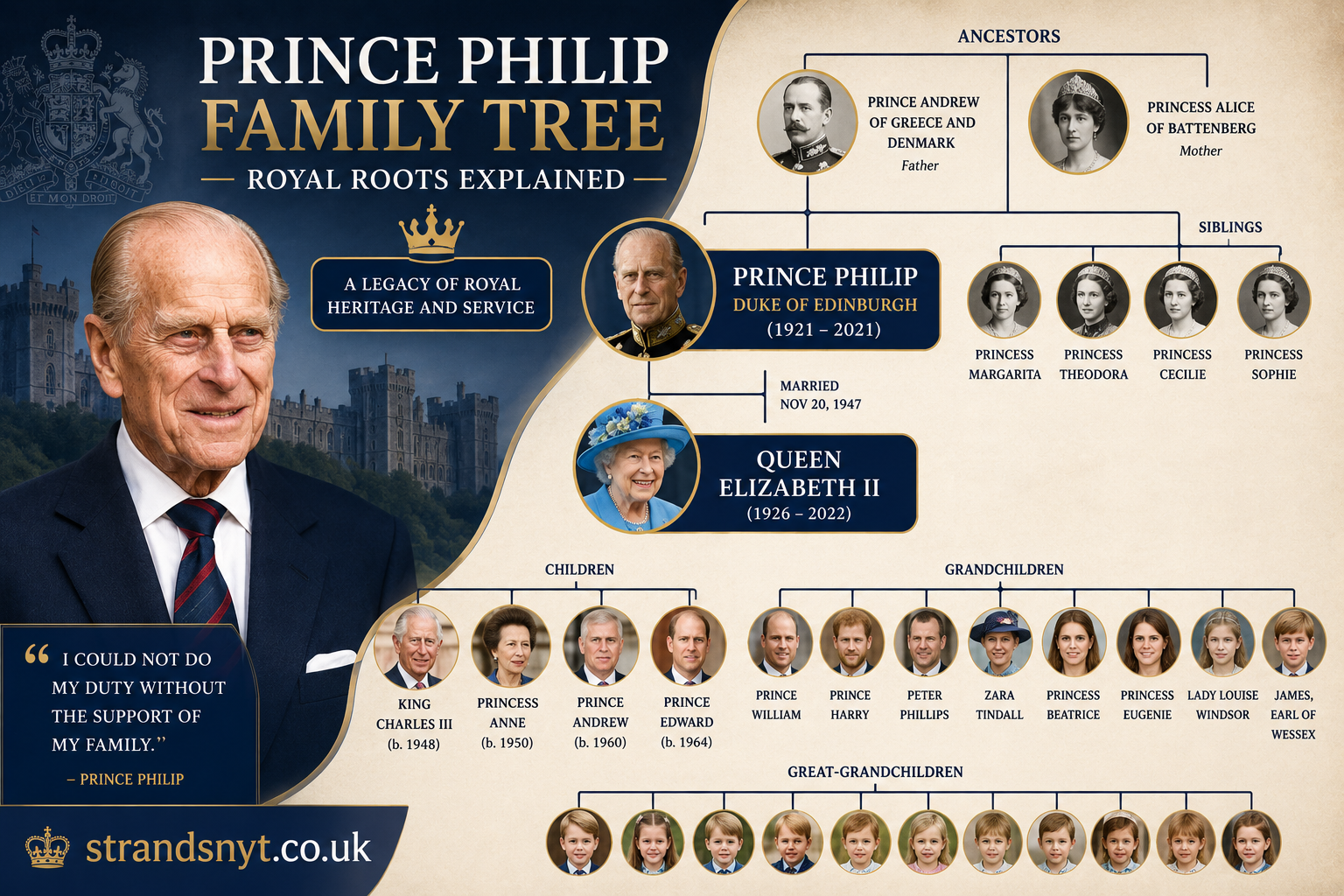
Prince Philip Family Tree: Royal Roots Explained
Why Prince Philip’s Family Tree Still Fascinates People
Royal family trees can feel confusing at first. Names repeat, titles change, countries overlap, and one person can belong to several royal houses at once. That is especially true when we talk about Prince Philip, Duke of Edinburgh.
Many people know Prince Philip as Queen Elizabeth II’s husband. Others remember him as the father of King Charles III, the grandfather of Prince William and Prince Harry, and the steady royal figure who stood beside the Queen for more than 70 years. However, his own family background is just as interesting as the British royal line he married into.
Prince Philip was not born as a British prince. He was born in Greece as Prince Philip of Greece and Denmark. His ancestry connected him to Greek royalty, Danish royalty, German nobility, Russian imperial history, and the British royal family. In other words, his family tree was already royal long before he married Princess Elizabeth.
He was born on June 10, 1921, on the Greek island of Corfu, as Prince Philip of Greece and Denmark. His father was Prince Andrew of Greece and Denmark, and his mother was Princess Alice of Battenberg. His early life was turbulent because his family was exiled from Greece when he was still very young.
So, if you have ever searched “Prince Philip family tree” and felt lost, you are not alone. His roots stretch across Europe, but once you break them down, the story becomes much easier to follow.
Prince Philip Bio
| Bio Detail | Information |
|---|---|
| Full Name | Prince Philip, Duke of Edinburgh |
| Birth Name | Prince Philip of Greece and Denmark |
| Date of Birth | June 10, 1921 |
| Age | Died at age 99 on April 9, 2021 |
| Profession | Royal consort, naval officer, public servant, charity patron |
| Nationality | British, born into Greek and Danish royalty |
| Birthplace | Corfu, Greece |
| Parents | Prince Andrew of Greece and Denmark and Princess Alice of Battenberg |
| Spouse | Queen Elizabeth II |
| Children | King Charles III, Princess Anne, Prince Andrew, Prince Edward |
| Net Worth Approx. | Estimated around $30 million at the time of death, based on public reports |
| Notable Works / Achievements | Duke of Edinburgh’s Award, longest-serving British royal consort, Royal Navy service, public duty, royal patronages |
Who Was Prince Philip?
Prince Philip was one of the most important royal figures of the modern age. He was born into European royalty, served in the Royal Navy, married Princess Elizabeth in 1947, and became the consort of the British monarch when Elizabeth became Queen in 1952.
For most of his public life, Prince Philip walked one step behind Queen Elizabeth II. That image became familiar across the world. Yet behind that role was a man with a dramatic family history, a royal bloodline of his own, and a childhood shaped by exile, separation, and movement across Europe.
He served as consort from Queen Elizabeth II’s accession in 1952 until his death in 2021, making him the longest-serving consort in British royal history. Before marrying Elizabeth, he renounced his Greek and Danish titles, became a naturalised British subject, and adopted the surname Mountbatten.
Prince Philip’s Royal Roots Explained
To understand Prince Philip family tree, you have to start with two major lines: his father’s Greek and Danish royal line, and his mother’s Battenberg and Hesse family line.
His father connected him to the royal houses of Greece and Denmark. His mother connected him to the Battenberg family, German nobility, and Queen Victoria’s descendants.
That means Prince Philip was linked to many of Europe’s royal families before he ever joined the British monarchy.
His Father’s Side: Greek and Danish Royalty
Prince Philip father was Prince Andrew of Greece and Denmark. Prince Andrew was the son of King George I of Greece. This connected Philip directly to the Greek royal family.
However, the Greek royal family itself had strong Danish roots. King George I of Greece was born Prince William of Denmark before he became king of Greece. Because of that, Prince Philip inherited both Greek and Danish royal identity from his father’s side.
This is why his birth title was Prince Philip of Greece and Denmark.
His Mother’s Side: Battenberg, Hesse, and British Connections
Prince Philip mother was Princess Alice of Battenberg. She was born into the Battenberg family, a branch connected to German nobility and the wider European royal world.
Princess Alice was also a great-granddaughter of Queen Victoria. This is very important because Queen Elizabeth II was also a descendant of Queen Victoria. That means Prince Philip and Queen Elizabeth II were distant cousins through Queen Victoria.
Philip and Elizabeth were both great-great-grandchildren of Queen Victoria. Elizabeth descended from Queen Victoria’s eldest son, King Edward VII, while Philip descended from Queen Victoria’s second daughter, Princess Alice.
Prince Philip’s Parents
The parents of Prince Philip had very different lives, and both shaped his childhood in powerful ways.
Prince Andrew of Greece and Denmark
Prince Andrew was Prince Philip father. He was a Greek and Danish prince, and he served in the Greek army. His life became difficult after political problems in Greece, and the family was forced into exile.
That exile changed everything for Philip. He was still an infant when his family had to leave Greece. As a result, he grew up moving between relatives, schools, and countries.
Princess Alice of Battenberg
Princess Alice of Battenberg was Prince Philip mother. She was known for her deep faith, charitable work, and personal strength. She was born deaf but learned to lip-read in several languages, which was remarkable.
Later in life, Princess Alice became known for helping shelter Jewish people during World War II. She is remembered today as a brave and compassionate figure.
For Prince Philip, his mother’s life was both inspiring and painful. During his childhood, she faced serious health struggles and spent time away from the family. This added to the instability he experienced as a young boy.
Prince Philip’s Siblings
Prince Philip was the youngest of five children and the only son. He had four older sisters:
| Sibling | Full Name | Notes |
|---|---|---|
| Princess Margarita | Margarita of Greece and Denmark | Married into German nobility |
| Princess Theodora | Theodora of Greece and Denmark | Married Berthold, Margrave of Baden |
| Princess Cecilie | Cecilie of Greece and Denmark | Died tragically in a plane crash in 1937 |
| Princess Sophie | Sophie of Greece and Denmark | Married into German nobility |
| Prince Philip | Philip of Greece and Denmark | Later became Duke of Edinburgh |
Philip’s four elder sisters were Margarita, Theodora, Cecilie, and Sophie. He was the youngest child and only son of Prince Andrew and Princess Alice.
The Tragedy of Princess Cecilie
One of the saddest parts of Prince Philip family tree is the death of his sister Cecilie. She died in a plane crash in 1937 along with members of her family. Philip was still a teenager at the time.
That tragedy deeply affected him. It came during an already difficult childhood and added another layer of loss to his early life.
Prince Philip and Queen Elizabeth II
The most famous branch of Prince Philip family tree begins with his marriage to Queen Elizabeth II. They married on November 20, 1947, when Elizabeth was still a princess.
Their marriage lasted 73 years, making it one of the longest and most famous royal marriages in history. Together, they became the central couple of the modern British monarchy.
Were Prince Philip and Queen Elizabeth Related?
Yes, Prince Philip and Queen Elizabeth II were related, but distantly. They were both descendants of Queen Victoria and King Christian IX of Denmark. This kind of distant cousin relationship is common in European royal families because many royal houses married into one another over generations.
They were third cousins through Queen Victoria and also related through King Christian IX of Denmark.
Why Their Marriage Mattered
The marriage between Prince Philip and Queen Elizabeth II connected two important royal backgrounds. Elizabeth brought the direct British royal line. Philip brought Greek, Danish, German, and wider European royal ancestry.
Their children became part of both family trees, carrying the bloodlines of the House of Windsor and Philip’s royal European heritage.
Prince Philip’s Children
Prince Philip and Queen Elizabeth II had four children:
| Child | Birth Year | Role |
|---|---|---|
| King Charles III | 1948 | Eldest child, became King of the United Kingdom |
| Princess Anne | 1950 | Princess Royal, known for public service and equestrian achievements |
| Prince Andrew | 1960 | Duke of York, later stepped back from public royal life |
| Prince Edward | 1964 | Duke of Edinburgh, youngest child |
Prince Philip and Queen Elizabeth II had four children: Charles, Anne, Andrew, and Edward.
King Charles III
King Charles III is the eldest child of Prince Philip and Queen Elizabeth II. Born in 1948, he became heir apparent when his mother became Queen in 1952. After Queen Elizabeth II died in 2022, Charles became King.
Through Charles, Prince Philip became the grandfather of Prince William and Prince Harry.
Princess Anne
Princess Anne, the Princess Royal, is the second child and only daughter of Prince Philip and Queen Elizabeth II. She is known for her strong work ethic, charity work, and equestrian career.
Many people say Princess Anne inherited some of Philip’s direct personality, discipline, and love of horses.
Prince Andrew
Prince Andrew is the third child of Prince Philip and Queen Elizabeth II. He was born in 1960 and served in the Royal Navy. His public role later changed after controversy and legal issues.
Still, in the family tree, he remains the father of Princess Beatrice and Princess Eugenie.
Prince Edward
Prince Edward is the youngest child of Prince Philip and Queen Elizabeth II. In 2023, he received the title Duke of Edinburgh, a title strongly associated with his father.
Edward and his wife, Sophie, Duchess of Edinburgh, have continued active royal duties.
Prince Philip’s Grandchildren
Prince Philip had eight grandchildren. They are part of the modern British royal family and continue his family line into the next generation.
| Grandchild | Parent |
|---|---|
| Prince William | King Charles III |
| Prince Harry | King Charles III |
| Peter Phillips | Princess Anne |
| Zara Tindall | Princess Anne |
| Princess Beatrice | Prince Andrew |
| Princess Eugenie | Prince Andrew |
| Lady Louise Windsor | Prince Edward |
| James, Earl of Wessex | Prince Edward |
These grandchildren connect Prince Philip directly to many of the best-known figures in today’s royal family.
Prince William and Prince Harry
Prince William and Prince Harry are probably the most globally recognized of Prince Philip grandchildren. They are the sons of King Charles III and Diana, Princess of Wales.
Prince William is now first in line to the British throne after King Charles III. This means Philip’s family line continues directly toward the future of the monarchy through William and his children.
Peter Phillips and Zara Tindall
Peter Phillips and Zara Tindall are the children of Princess Anne. They do not hold royal titles, but they are still part of Prince Philip family tree.
Zara, like her mother and grandfather, has strong equestrian connections. That sporting link feels very fitting because Philip loved carriage driving and outdoor activity.
Princess Beatrice and Princess Eugenie
Princess Beatrice and Princess Eugenie are the daughters of Prince Andrew and Sarah, Duchess of York. They are also part of Philip’s royal line through the York branch.
Lady Louise Windsor and James, Earl of Wessex
Lady Louise Windsor and James, Earl of Wessex, are the children of Prince Edward and Sophie. Lady Louise has often been noted for sharing Prince Philip’s love of carriage driving, which gives their connection a warm personal touch.
Prince Philip’s Great-Grandchildren
By the time Prince Philip died in 2021, he had several great-grandchildren. His great-grandchildren include the children of Prince William, Prince Harry, Peter Phillips, Zara Tindall, Princess Beatrice, Princess Eugenie, and others in the wider family.
Some of the best-known great-grandchildren include:
- Prince George
- Princess Charlotte
- Prince Louis
- Prince Archie
- Princess Lilibet
- Savannah Phillips
- Isla Phillips
- Mia Tindall
- Lena Tindall
- Lucas Tindall
- Sienna Mapelli Mozzi
- August Brooksbank
- Ernest Brooksbank
This younger generation continues the family story of Prince Philip into the future.
Prince Philip’s Connection to Queen Victoria
One of the most important things to understand about Prince Philip family tree is his connection to Queen Victoria.
Queen Victoria is often called the “grandmother of Europe” because so many royal families descended from her children and grandchildren. Prince Philip was one of those descendants.
His mother, Princess Alice of Battenberg, was descended from Queen Victoria’s daughter, Princess Alice. Queen Elizabeth II descended from Queen Victoria’s son, King Edward VII.
This made Philip and Elizabeth distant cousins.
Why Queen Victoria Matters in His Family Tree
Queen Victoria matters because she connects Prince Philip to:
- British royalty
- German royal houses
- Russian imperial history
- European dynastic marriages
- Queen Elizabeth II’s ancestry
This connection helps explain why European royal family trees often overlap.
Prince Philip’s Connection to Denmark
Prince Philip also had a strong Danish connection through his father’s line. His Greek royal family descended from King Christian IX of Denmark.
King Christian IX is another major figure in European royal genealogy. Like Queen Victoria, he had descendants across many royal families.
Because of this, Prince Philip had Danish royal blood as well as Greek royal identity.
Prince Philip’s Connection to Russia
The family tree of Prince Philip also connects to the Russian imperial family. His maternal grandmother, Princess Victoria of Hesse and by Rhine, was the sister of Empress Alexandra of Russia, wife of Tsar Nicholas II.
That means Philip was related to the Romanovs. His DNA was later important in helping identify remains of members of the Romanov family because of his shared maternal line.
This is one of the most fascinating parts of Prince Philip family tree because it connects British royal history with one of the most dramatic chapters in Russian history.
Prince Philip’s House and Surname
Before marriage, Prince Philip belonged to the House of Glücksburg through his father’s royal line. This house is connected to the royal families of Denmark, Greece, and Norway.
Before marrying Princess Elizabeth, he gave up his Greek and Danish royal titles and adopted the surname Mountbatten, from his maternal family line. Mountbatten came from Battenberg, which had been anglicized during World War I.
Why Mountbatten Matters
The name Mountbatten became a key part of Prince Philip identity in Britain. It linked him to his mother’s family and to his uncle, Lord Louis Mountbatten.
Later, the royal family used the name Mountbatten-Windsor for some descendants of Queen Elizabeth II and Prince Philip.
Simple Prince Philip Family Tree
Here is a simplified version of Prince Philip family tree:
| Generation | Family Members |
|---|---|
| Grandparents | King George I of Greece, Queen Olga of Greece, Prince Louis of Battenberg, Princess Victoria of Hesse and by Rhine |
| Parents | Prince Andrew of Greece and Denmark, Princess Alice of Battenberg |
| Siblings | Margarita, Theodora, Cecilie, Sophie |
| Prince Philip | Duke of Edinburgh, husband of Queen Elizabeth II |
| Children | King Charles III, Princess Anne, Prince Andrew, Prince Edward |
| Grandchildren | Prince William, Prince Harry, Peter Phillips, Zara Tindall, Princess Beatrice, Princess Eugenie, Lady Louise Windsor, James, Earl of Wessex |
| Great-Grandchildren | Prince George, Princess Charlotte, Prince Louis, Prince Archie, Princess Lilibet, and others |
This table gives a clean view of how Prince Philip fits into royal history.
Why Prince Philip’s Family Tree Is So Important
The family tree of Prince Philip matters because it connects several major royal stories into one life.
He was connected to:
- Greek royalty
- Danish royalty
- British royalty
- German noble families
- Russian imperial relatives
- Queen Victoria’s descendants
- King Christian IX’s descendants
- The modern House of Windsor
That is a lot of history in one person.
A Bridge Between European Royal Houses
Prince Philip was a bridge between old European royalty and the modern British monarchy. His life began in exile and ended at the heart of the British royal family.
That journey is remarkable. He started as a displaced prince and became the longest-serving royal consort in British history.
A Personal Legacy Through His Descendants
His family tree also matters because his descendants now shape the future of the monarchy. King Charles III is his son. Prince William is his grandson. Prince George is his great-grandson and a future king.
That means the bloodline of Prince Philip will remain part of British royal history for generations.
Prince Philip’s Legacy Through Family
When people discuss Prince Philip, they often focus on duty, public service, and his role beside Queen Elizabeth II. But his family legacy is just as powerful.
His children, grandchildren, and great-grandchildren keep his story alive in different ways.
His Influence on King Charles III
As a father, Prince Philip had a strong influence on King Charles III. Their relationship was sometimes described as complex, but Philip’s ideas about discipline, duty, and resilience shaped the royal household.
His Bond With Princess Anne
Princess Anne is often seen as one of the royals most like Prince Philip. She shares his practical attitude, direct style, and commitment to work.
His Legacy Through Prince William
Prince William carries Prince Philip family line into the monarchy’s future. As heir to the throne, William represents both the Windsor line and Philip’s European royal roots.
Frequently Asked Questions About Prince Philip Family Tree
Who were Prince Philip’s parents?
Prince Philip parents were Prince Andrew of Greece and Denmark and Princess Alice of Battenberg.
Was Prince Philip born royal?
Yes, Prince Philip was born royal. His birth title was Prince Philip of Greece and Denmark.
How was Prince Philip related to Queen Elizabeth II?
Prince Philip and Queen Elizabeth II were distant cousins through Queen Victoria and King Christian IX of Denmark.
How many children did Prince Philip have?
Prince Philip had four children with Queen Elizabeth II: King Charles III, Princess Anne, Prince Andrew, and Prince Edward.
How many siblings did Prince Philip have?
Prince Philip had four older sisters: Margarita, Theodora, Cecilie, and Sophie.
Is Prince Philip related to the Romanovs?
Yes, Prince Philip was related to the Romanov family through his maternal line. His DNA was later used in efforts connected to identifying Romanov remains.
Why did Prince Philip use the surname Mountbatten?
Before marrying Princess Elizabeth, Prince Philip renounced his Greek and Danish royal titles and adopted the surname Mountbatten from his mother’s family.
Conclusion: Prince Philip’s Family Tree Tells a Bigger Royal Story
The family tree of Prince Philip is more than a list of names. It is a map of European royal history. His roots reached into Greece, Denmark, Germany, Russia, and Britain. His life connected old royal houses with the modern House of Windsor.
He was born Prince Philip of Greece and Denmark, lived through exile and family hardship, served in the Royal Navy, married Queen Elizabeth II, and became one of the most recognizable royal figures of the 20th and 21st centuries.
Through his children, grandchildren, and great-grandchildren, Prince Philip remains part of the future of the British monarchy. King Charles III is his son. Prince William is his grandson. Prince George, a future king, is his great-grandson.
That is why the Prince Philip family tree is so fascinating. It does not only explain where he came from. It also shows where the royal family is going.
If this article helped you understand Prince Philip royal roots, family tree, and legacy, share it with someone interested in British royal history or leave a comment with the part of his ancestry you found most surprising.

Lionel Dahmer: The Story Behind Jeffrey Dahmer Father

Liz Ted Bundy: The Truth Behind Their Relationship

Beverley Mitchell Movies and TV Shows Career Guide

Who Is Alex Karp Wife? Private Life of Palantir CEO

Melanie Zanona Salary, Career Growth & Net Worth Revealed

How to Make Slime: The Ultimate DIY Guide for Kids and Adults
Trending
-
 Business10 months ago
Who Is Alex Karp Wife? Private Life of Palantir CEO
-
 Celebrity10 months ago
Melanie Zanona Salary, Career Growth & Net Worth Revealed
-
 Lifestyle12 months ago
How to Make Slime: The Ultimate DIY Guide for Kids and Adults
-

 Business10 months ago
Rahki Giovanni Net Worth: Income, Fitness, and Success
-

 Nature11 months ago
Fascinating World of Facts: A Journey Through Datos Curiosos
-

 Celebrity11 months ago
Who Is Drew Pritchard New Wife? Inside the Antique Star’s Private Love Life
-

 Entertainment12 months ago
Strands NYT: Unraveling the Digital Threads of a New Online Trend
-

 Entertainment9 months ago
Adam Woodyatt Net Worth Revealed: Career, Income & Assets